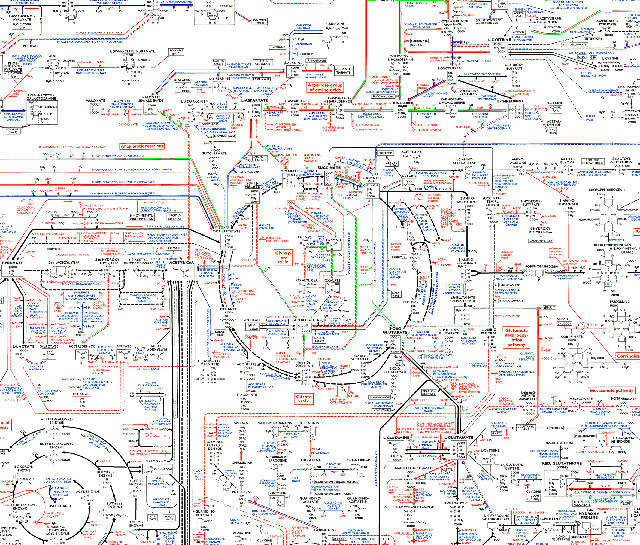
Shaolin, I'm not sure that's true. Addiction speaks to chemical processes within the behavioral systems of the brain, and there seems to be certain genetic predispositions that respond with addictive behavior when certain chemical receptors are antagonized, even if only once. While not specific to addiction, I have had the experience whereby one pill of a certain medication (ONE PILL) reset my overall muscle tension when at rest - it altered certain "set points" in my brain that would trigger torticollis. It was completely unexpected and far from the norm. After my first chiropractic adjustment at age 30, I was an inch taller instantly and grew another inch over the next year (and wound up with a very hairy back). My point is that while the Psalmist says we are "fearfully and wonderfully made," the physical body is also horrifically complex and unpredictable, and I provide for you a simple chart of the Krebs cycle of chemical reactions that is in each and every cell of one's body:
Here's how one knows that willpower is nearly ineffective.... go ahead, use your willpower to grow hair on your head. Use willpower to stop your beard from growing. I am constantly amazed at how many Christians (present company excepted) think that bondage to sin can be broken by an individual's willpower. And, after all, isn't bondage to sin just another way of saying "addiction" ??
For we know that the law is spiritual: but I am carnal, sold under sin. For that which I do I allow not: for what I would, that do I not; but what I hate, that do I. If then I do that which I would not, I consent unto the law that it is good. Now then it is no more I that do it, but sin that dwelleth in me.
Paul directly stated that " I " was not doing it, that it's not a matter of willpower, but that a "sin compulsion" causes people to sin. This is the bondage for which Jesus came to set us free.
(I am also constantly amazed at how many Christians are amazed that sinners sin. How could they help but not?)
Good to see you here,
Rhema